Setmelanotide: A Physician’s Read on MC4R Agonism, From POMC Deficiency to TRANSCEND
Andres Zuleta, MD · A physician's read
Most of the obesity pharmacology I use acts on gut hormone receptors. Setmelanotide acts further downstream, at the hypothalamic melanocortin 4 receptor (MC4R), and it only makes sense where that pathway is broken.
Watch the 5-minute story.
The pathway and the genetics
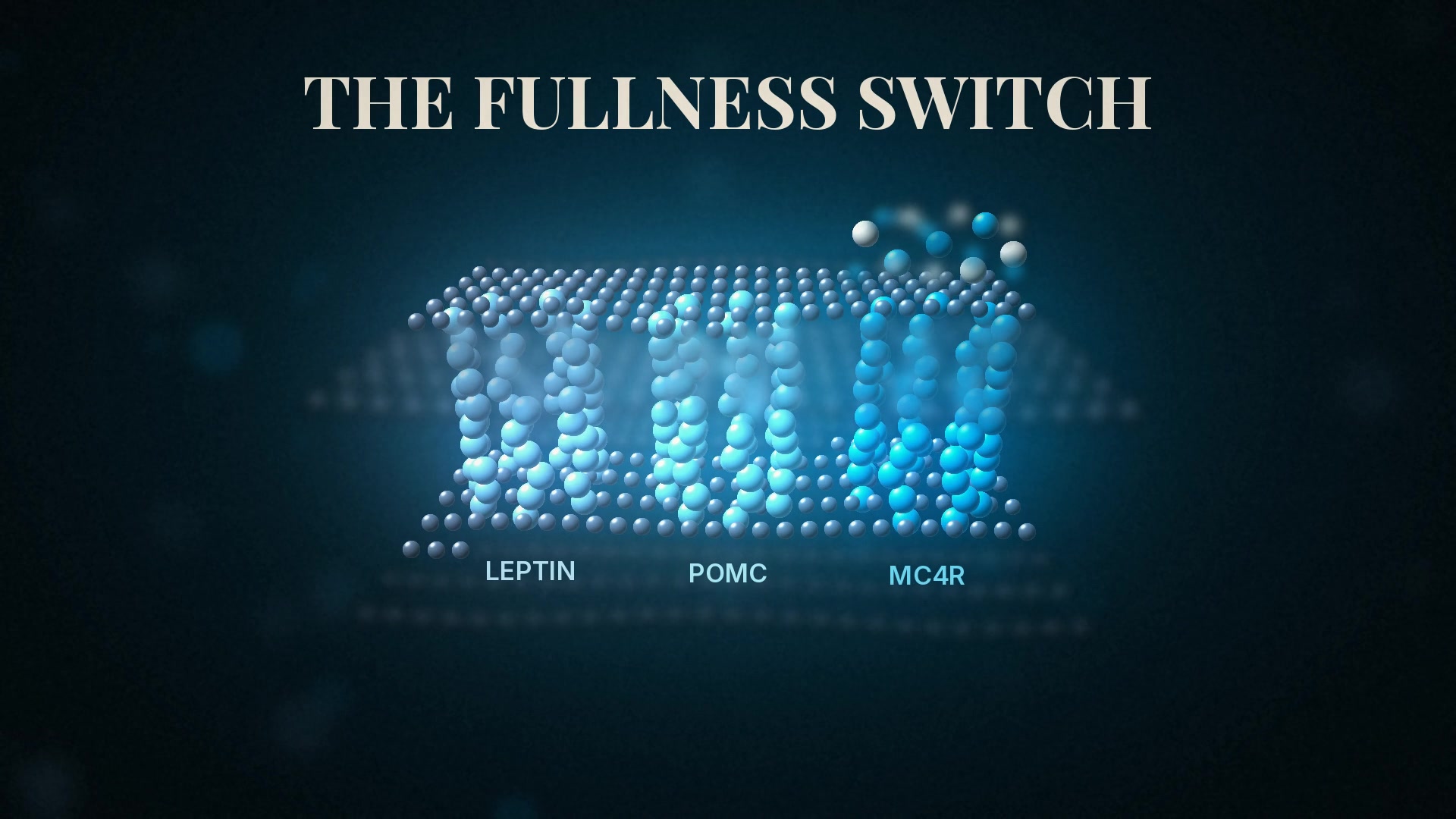
Leptin signalling drives arcuate POMC neurons; POMC is cleaved by PCSK1 to alpha MSH, which activates MC4R to signal satiety. MC4R knockout mice were obese (Huszar, Cell 1997, PMID 9019399). Krude and colleagues described POMC loss of function in children with early onset obesity, adrenal insufficiency and red hair (Nat Genet 1998, PMID 9620771), and MC4R frameshift mutations segregated with dominantly inherited obesity (Yeo, PMID 9771698; Vaisse, PMID 9771699).
The drug
Setmelanotide (RM-493) is a synthetic cyclic octapeptide MC4R agonist with a half-life of about 11 hours, given as a daily subcutaneous injection (FDA clinical review). It bypasses upstream defects in leptin receptor, POMC or PCSK1 signalling, but needs a functioning receptor downstream.

The evidence
- First in patients (Kuhnen, NEJM 2016, PMID 27468060): two patients with POMC deficiency; sustained reduction in hunger and 51.0 kg weight loss after 42 weeks in one.
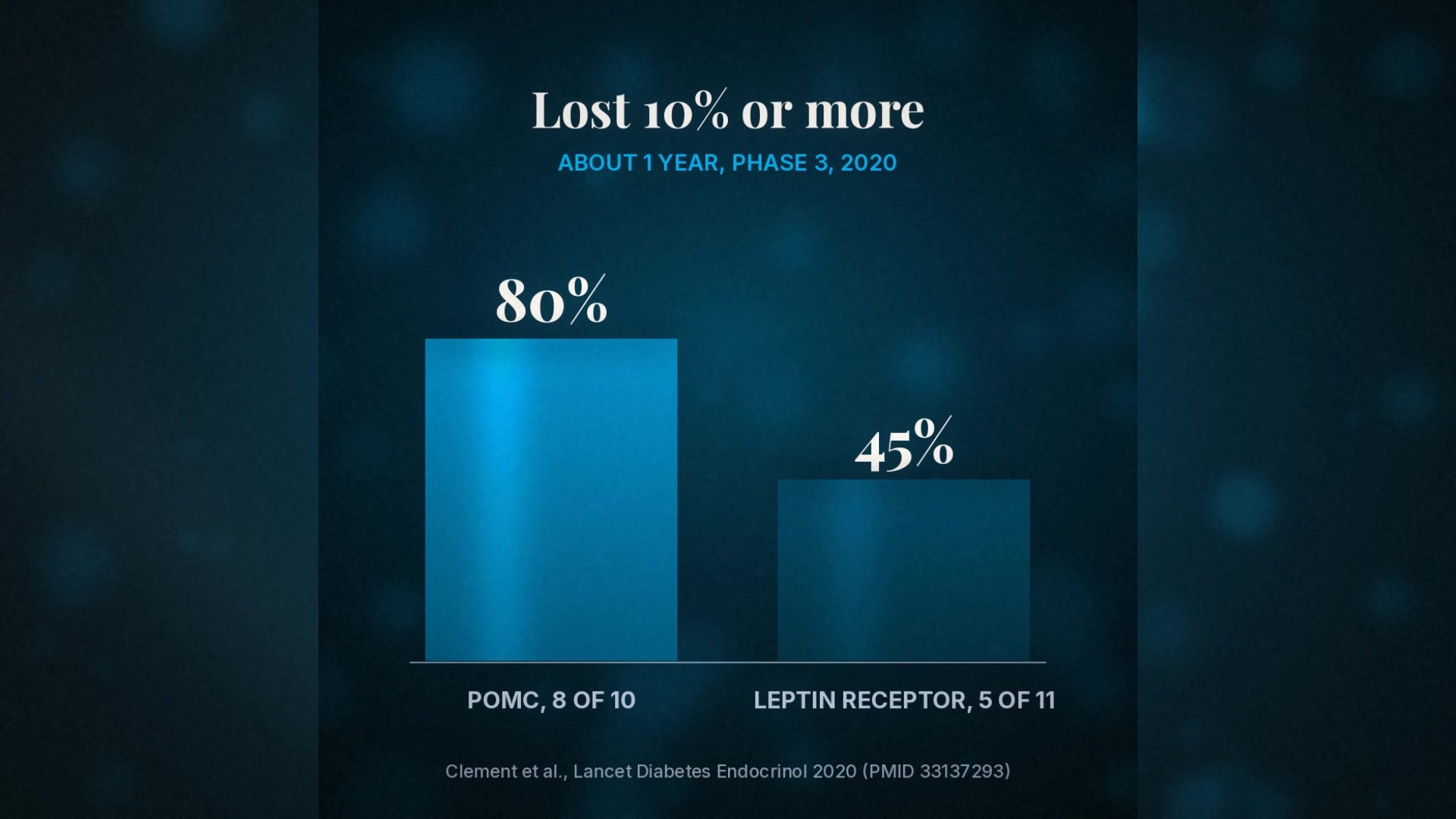
- POMC and LEPR phase 3 (Clement, Lancet Diabetes Endocrinol 2020, PMID 33137293): single arm, open label with a placebo withdrawal sequence; at least 10% weight loss at about 1 year in 8 of 10 (POMC) and 5 of 11 (LEPR); most hunger score -27.1% and -43.7%.
- Bardet Biedl syndrome (Haqq, Lancet Diabetes Endocrinol 2022, PMID 36356613): 32.3% of patients aged 12+ reached at least 10% weight loss at 52 weeks; hyperpigmentation 61%.
- TRANSCEND, acquired hypothalamic obesity (Miller, NEJM 2026, PMID 42418774): 120 participants aged 4 to 66, randomized 2:1, 52 weeks; BMI -16.5% vs +3.3% with placebo; hunger scores improved; serious adverse events 28% vs 8%.
Label and limits
The US label (revised 03/2026) covers acquired hypothalamic obesity from age 4, and Bardet Biedl syndrome and POMC, PCSK1 or LEPR deficiency from age 2, and explicitly excludes general polygenic obesity. Warnings include generalized hyperpigmentation with new or darkening nevi (baseline and periodic skin exams), depression and suicidal ideation, spontaneous penile erections and hypersensitivity; in hypothalamic obesity, watch for adrenal crises and sodium shifts in patients with adrenal insufficiency or diabetes insipidus. The trials are small and sponsor funded.
What I take from it
This is precision medicine for appetite. The clinical step is recognizing who to test: severe obesity with relentless hunger beginning in early childhood, or rapid weight gain after hypothalamic injury. For everyone else, it is the wrong tool.
For the patient-friendly version, read the ThriveMed post: https://www.thrivemed.us/thrivecityblog/setmelanotide-mc4r-hunger-switch-peptide
Sources
- Huszar D et al. Cell 1997 (PMID 9019399).
- Krude H et al. Nat Genet 1998 (PMID 9620771).
- Yeo GS et al. Nat Genet 1998 (PMID 9771698); Vaisse C et al. Nat Genet 1998 (PMID 9771699).
- Kuhnen P et al. NEJM 2016 (PMID 27468060).
- Clement K et al. Lancet Diabetes Endocrinol 2020 (PMID 33137293).
- Haqq AM et al. Lancet Diabetes Endocrinol 2022 (PMID 36356613).
- Miller JL et al. NEJM 2026 (PMID 42418774).
- FDA prescribing information and clinical review, IMCIVREE (setmelanotide), March 2026.
Andres Zuleta, MD.