The Heart Gets a Twin: What a 2020 Cardiology Paper Says About Digital Twins
By Andres Zuleta, MD, ThriveMed · Digital Twins, Episode 4 of 10
For a long time, a plan for a heart patient has lived in a doctor's head: the scans, the ECG, the numbers, and experience. In 2020 a group of researchers put a different idea in writing, in one of the main journals of my field. I want to walk you through it, because I think it shows where heart care is going.
The short version
- The paper: "The 'Digital Twin' to enable the vision of precision cardiology," by Jorge Corral-Acero, Pablo Lamata and colleagues, European Heart Journal, 2020.
- The idea: a digital twin is a virtual copy of one patient that brings together that person's data and the laws of physiology, so doctors can test choices on the copy first.
- The two pillars: models built from physics and biology, and models learned from data. The authors argue the twin needs both.
- Where it already shows up: some tools built on patient-specific models have been cleared by the FDA.
- The honest part: only a small number of models have reached the clinic, and the authors ask the field not to inflate expectations.
Watch the episode.
Who wrote it
This was not one lab. The author list runs from Oxford, King's College London, Barcelona, Bordeaux, Zaragoza, Oslo, Maastricht and Leuven to industry teams and two scientists from the FDA's Center for Devices and Radiological Health. That mix matters to me. Engineers, cardiologists, companies and regulators signed the same page.
What they mean by a digital twin
Precision medicine means care that fits the person in front of you. The authors point out that we keep getting better at collecting data about each patient. Their argument is that data is only the first pillar. The second is the growing power of computers to learn, to reason, and to build the digital twin of a patient.
In their words, the twin is a virtual tool that brings together a patient's clinical data over time, in a coherent and dynamic way, and links it with what we know about how the body works.
Two kinds of models, working together
This is the heart of the paper, so let me make it simple.
Mechanistic models are built from physiology and the laws of physics and chemistry. Think of equations for the electrical wave that moves through the heart, or for blood flowing in the coronary arteries. Their strength is that they can predict what happens in a situation nobody has measured yet.
Statistical models learn patterns from data. Their strength is that they can find useful predictions even when the biology is too complex to write down.
Each has a limit. A mechanistic model is only as good as its assumptions. A statistical model is only as good as the amount and variety of data it learned from. The authors argue that precision cardiology will come from combining the two: learning from data, and reasoning from physiology.
Diagnosis: seeing what we cannot measure directly
One example is fractional flow reserve, a measure of how much a narrowing limits blood flow to the heart muscle. It usually needs a catheter. The paper describes how a personalized 3D model of blood flow, built from a CT scan, can estimate it without the catheter. HeartFlow does this, and the CardioInsight system rebuilds the heart's electrical activity from sensors on the body surface using a model of the patient's own heart and torso. Both are named in the paper as tools that have received FDA clearance.
Treatment: trying the plan on the twin first
This is the part that excites me most. The authors describe a twin that could show whether a device or a medicine is a good fit by simulating the response before the therapy is chosen.
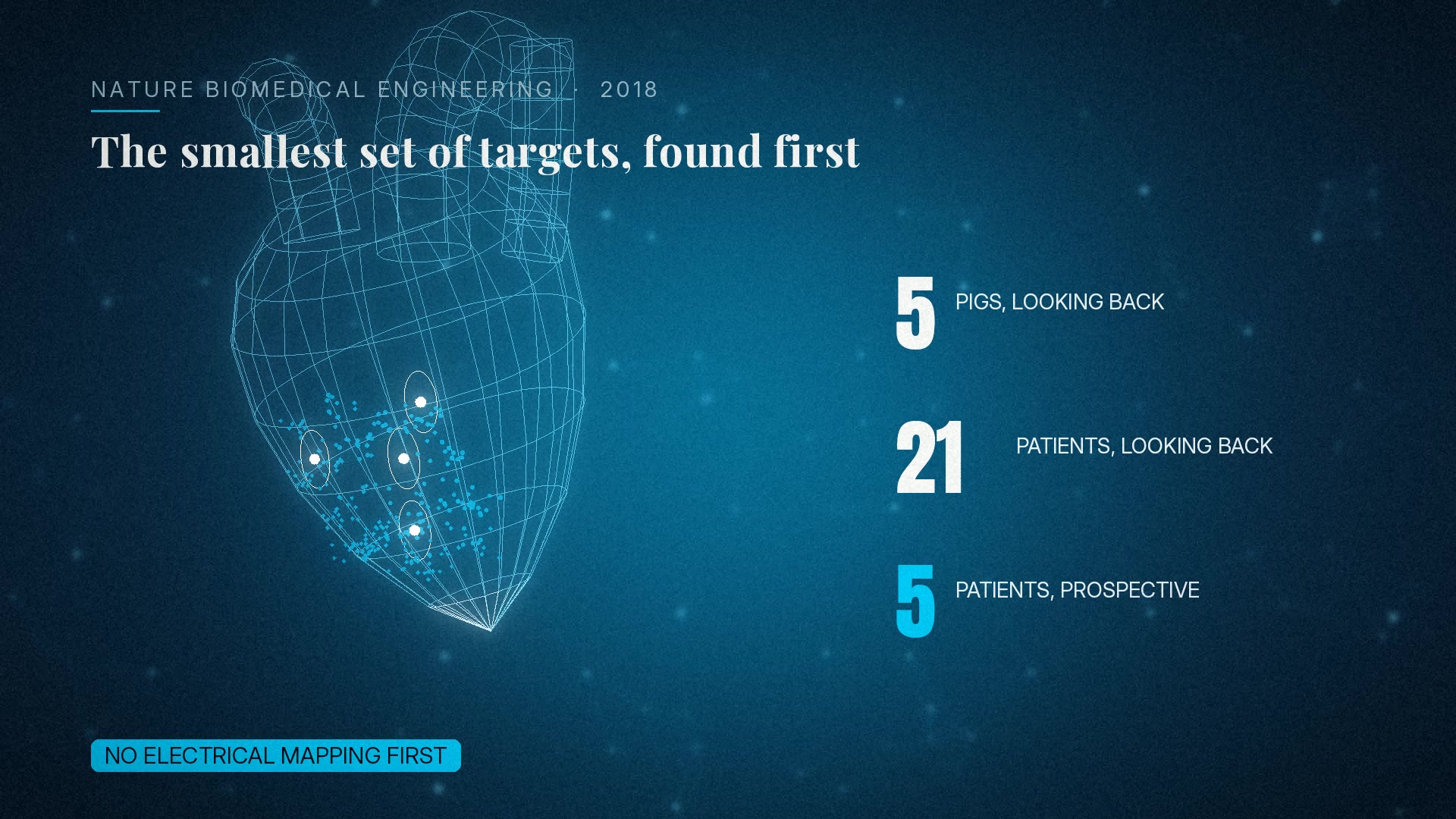
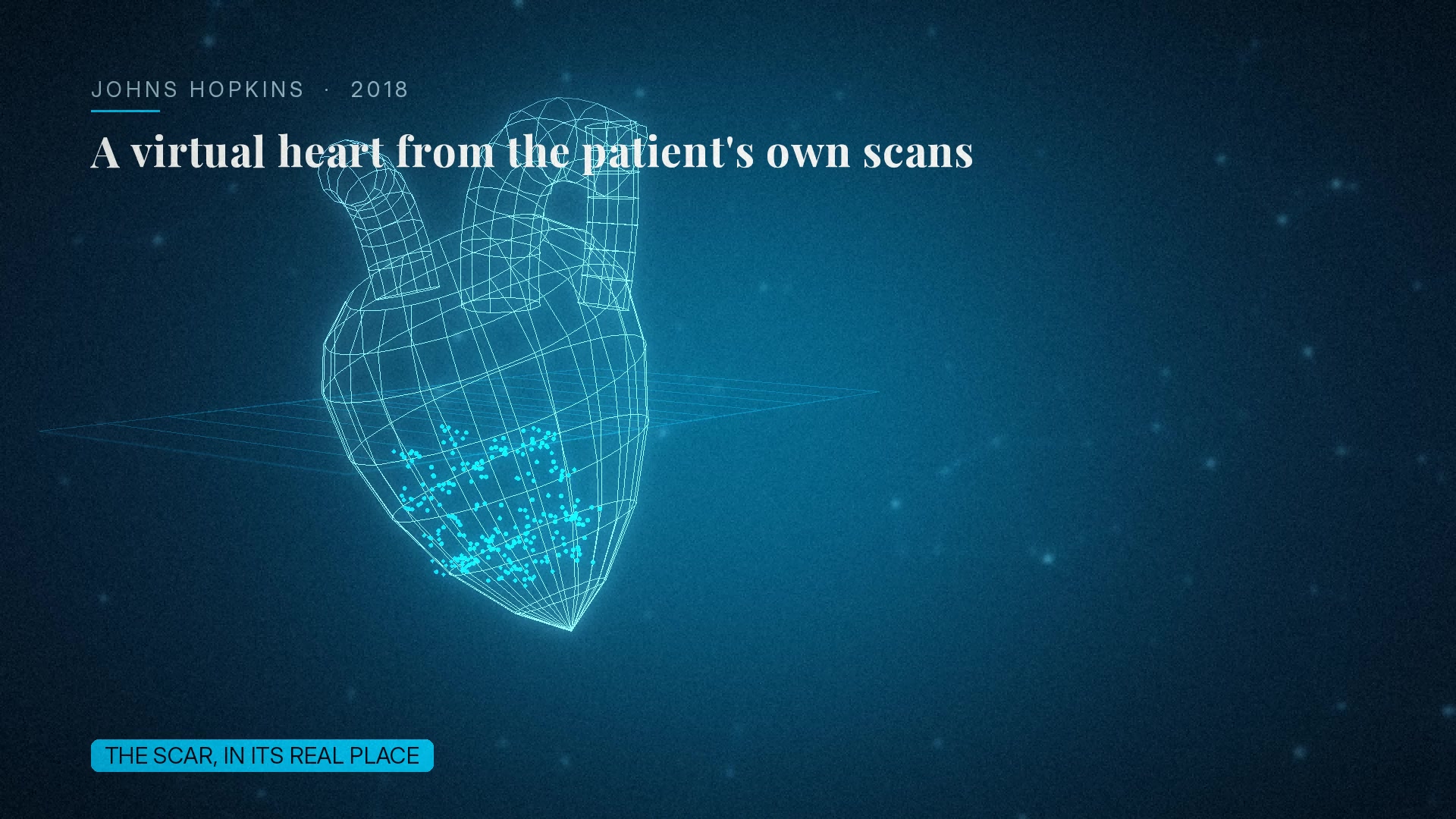
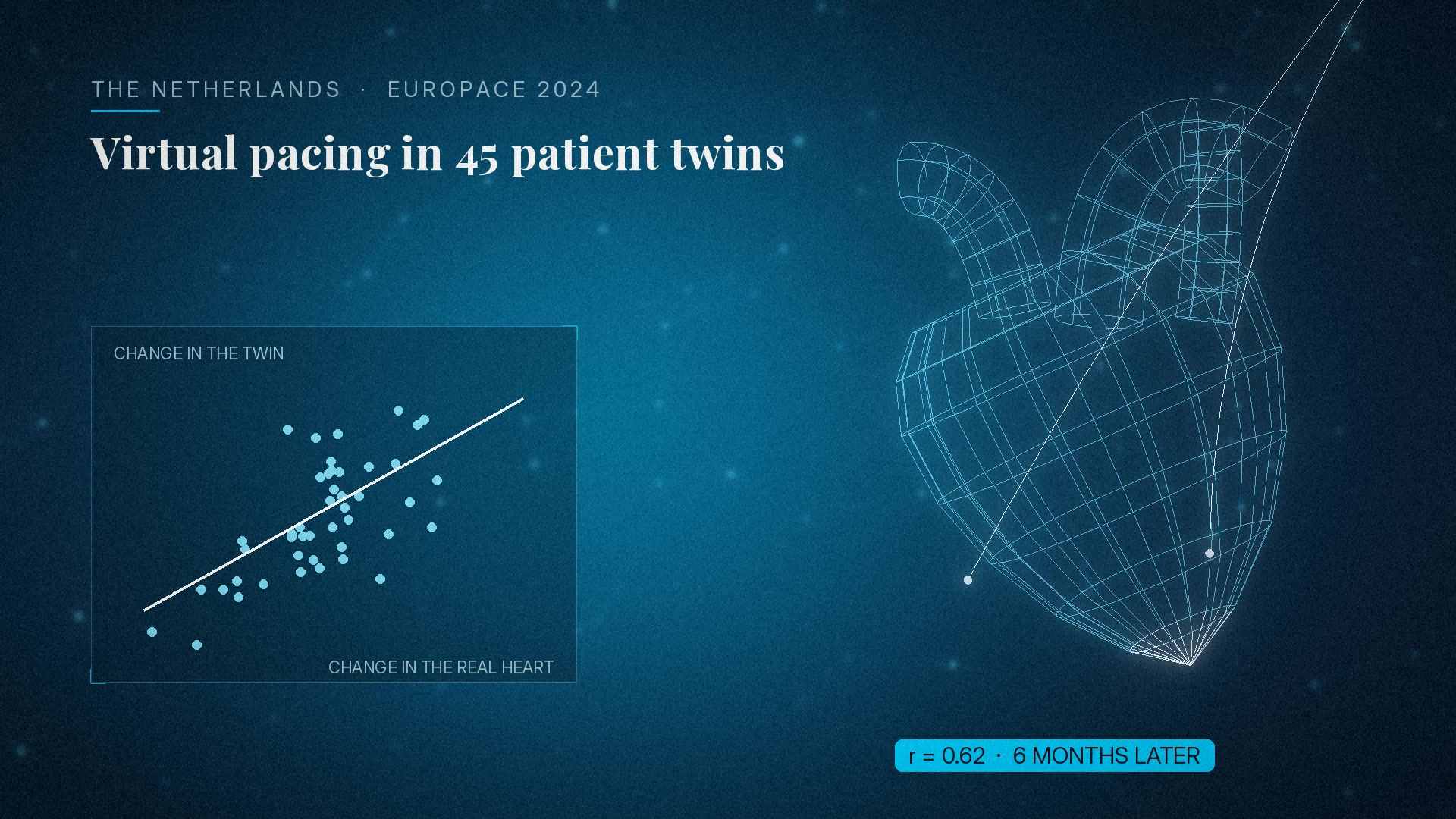
One example is ventricular tachycardia, a fast and dangerous rhythm that can follow a heart attack. With a personalized model, the best places to treat can be found before the procedure. Another is cardiac resynchronization therapy, a pacemaker that helps both sides of the heart beat together. For patients in the "grey zone," where the ECG does not clearly say who will benefit, models helped define a new measure that predicted response.
Prognosis: why the prediction makes sense
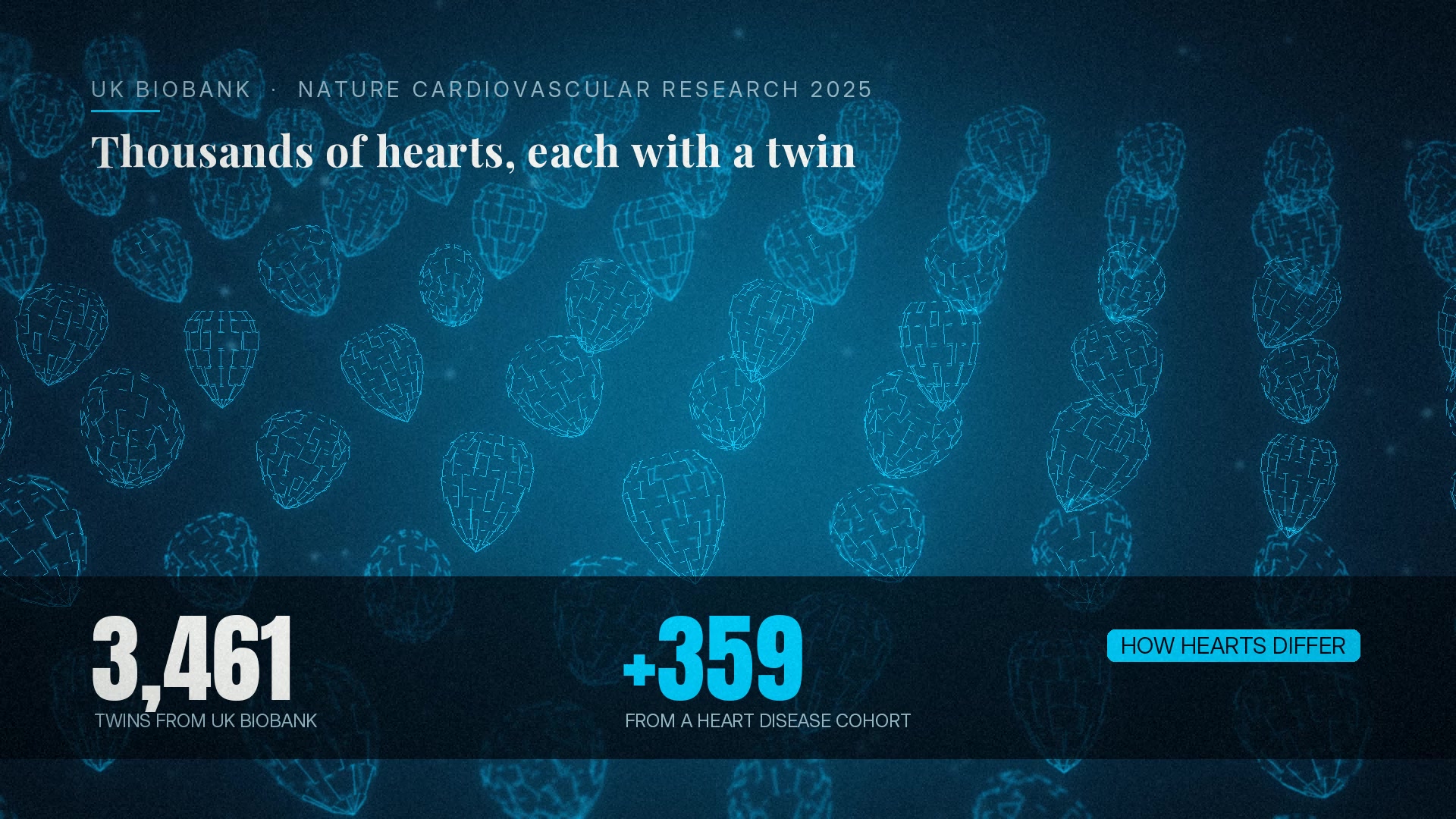
Statistical models can sort patients by risk. Mechanistic models can explain why. The paper describes people with hypertrophic cardiomyopathy grouped by their ECG patterns, with simulations linking each group to what may be happening in the heart muscle. I like this point a lot. A prediction I can explain is a prediction I can discuss with my patient.
The honest part
The authors are clear that only a small number of these models have reached clinical use. They name the hurdles: more validation, results that are hard for clinicians to interpret, and failures that can be hidden inside a model. They note that in recent years only 6% of artificial intelligence algorithms had been tested on outside data.
They also raise access to data, privacy and consent, the fear of the "black box," and the risk that a model trained on data that leaves a group out could give that group worse care. And they write a line I wish every field would adopt: research communities shall avoid inflating expectations. Any model is a simplified picture of reality.
What this means for you
The authors expected the twin to take shape gradually over the next 5 to 10 years. They picture a twin that follows a person through life, using data from wearable sensors and the lifestyle information patients choose to share, which moves care toward prevention. And they see the patient as more involved: better informed about their current and predicted state, and able to have better conversations with their doctor.
That is the part I care about. You are not an average. Your heart has its own shape, its own scar, its own rhythm. The promise of a twin is care that starts from yours.
Three ideas to take with you
- A digital twin joins your data with the physics and biology of the heart.
- It lets doctors test a plan on the copy before touching the patient.
- Trust has to be earned with evidence, and the best researchers say so themselves.
Next in the series, we take the twin to cancer care and the ICU. Stay curious, look closely, and keep learning how your body works.
Source
Corral-Acero J, Margara F, Marciniak M, et al. The 'Digital Twin' to enable the vision of precision cardiology. European Heart Journal. 2020;41(48):4556-4564. doi:10.1093/eurheartj/ehaa159. Open access, CC BY 4.0.