Maridebart Cafraglutide: A Physician’s Read on a Monthly GLP-1 Antibody-Peptide Conjugate
Andres Zuleta, MD · A physician's read
Half-life has shaped every GLP-1 receptor agonist I have prescribed. Native GLP-1 is cleared in about two minutes; acylation and albumin binding gave us daily liraglutide and weekly semaglutide. Maridebart cafraglutide (MariTide, formerly AMG 133) is a different answer to the same problem: put the peptide on an antibody.
Watch the 5-minute story.
The design
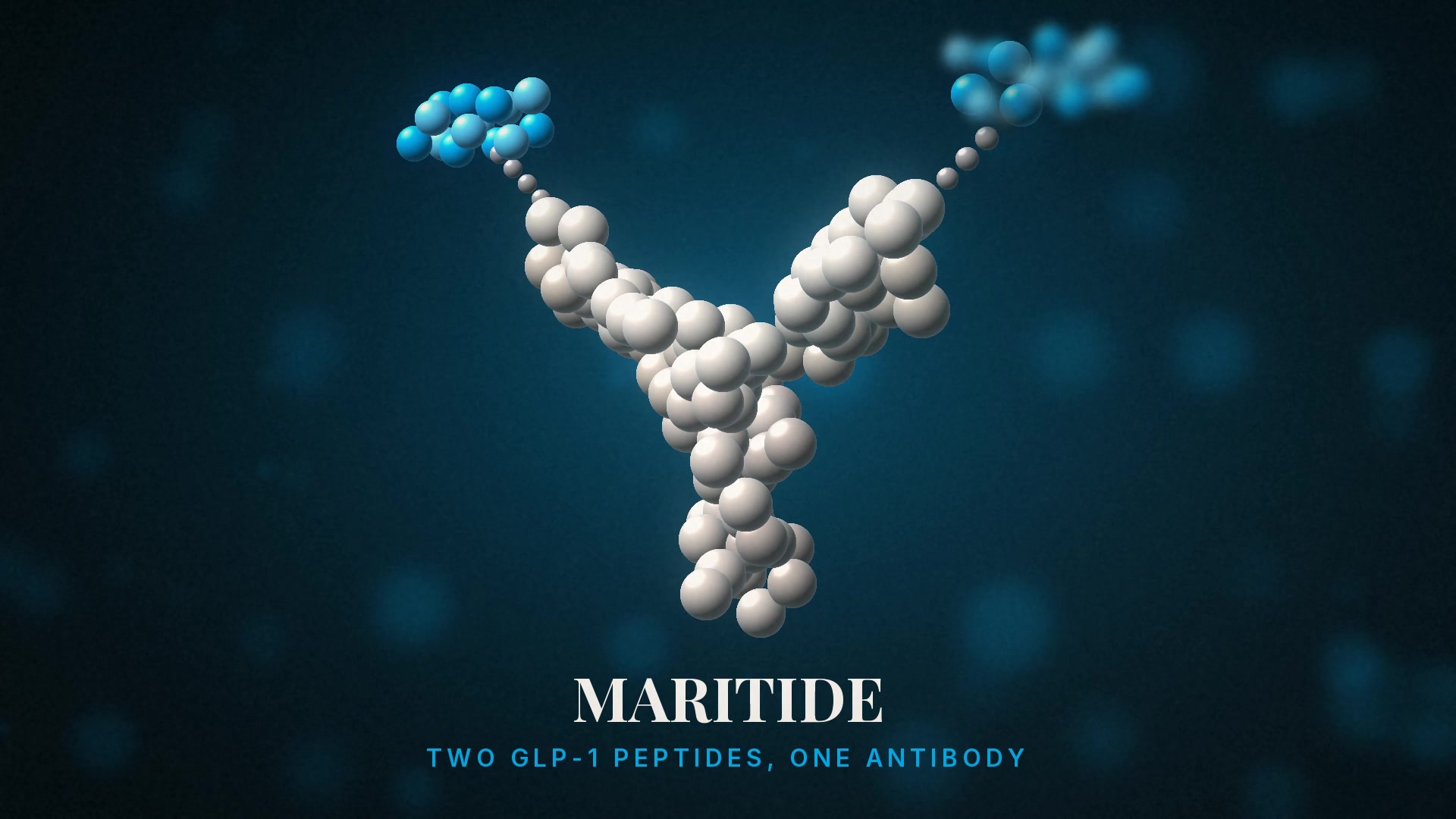
Veniant and colleagues (Nat Metab 2024, PMID 38316982) describe a fully human monoclonal antibody that antagonizes the GIP receptor, conjugated through amino acid linkers to two GLP-1 analogue agonist peptides. The antibody contributes the long half-life and a second mechanism. As a conjugate rather than a fusion protein, the peptide can carry non-natural chemistry while the antibody is expressed separately (Yie, Antib Ther 2026, PMID 42592044).
The GIP paradox
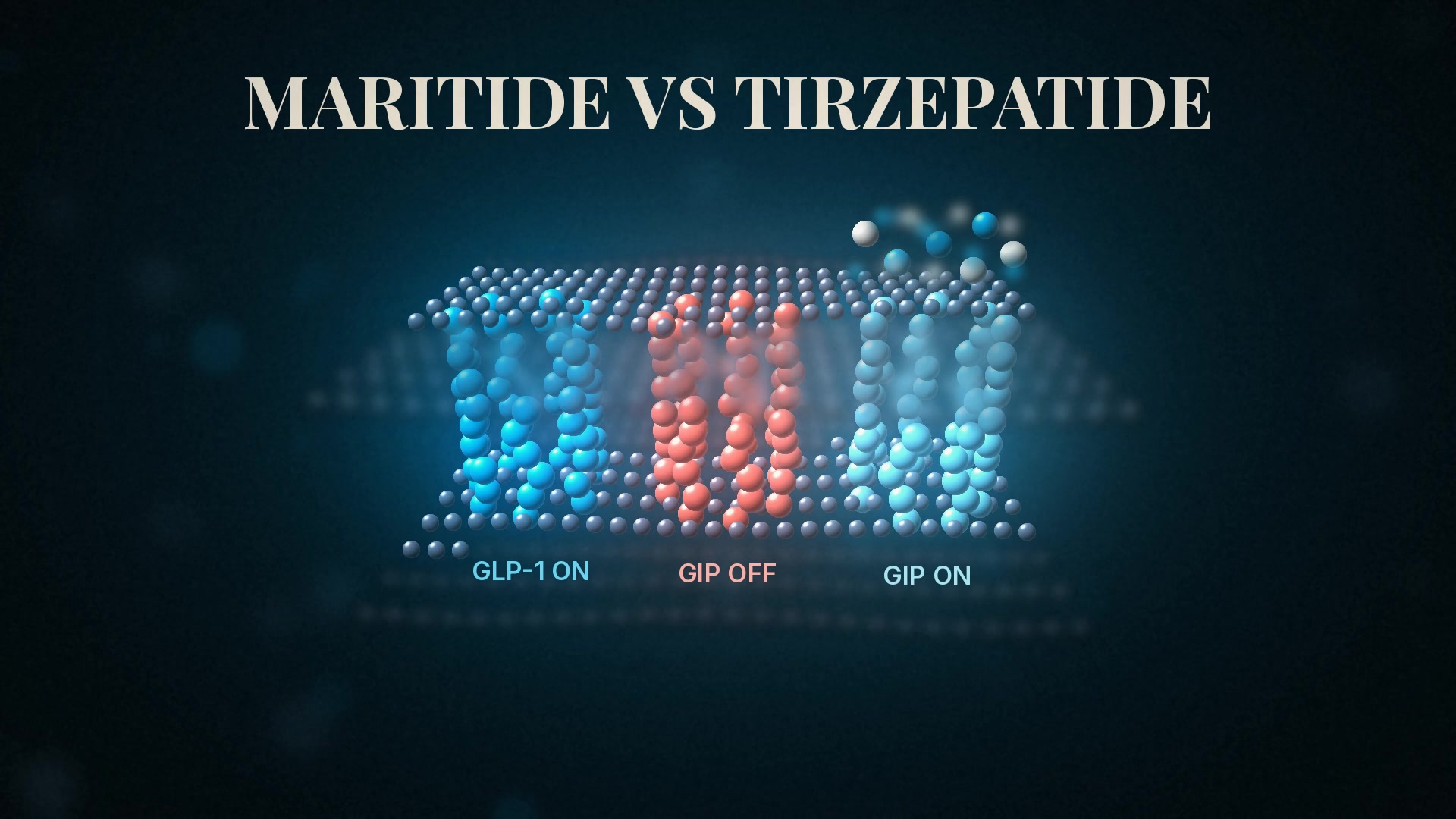
Tirzepatide is a GIP and GLP-1 receptor agonist; MariTide pairs GLP-1 agonism with GIP receptor antagonism, and both lower weight in trials. The rationale cited human genetics: protein-altering GIPR variants associated with lower BMI (Turcot, Nat Genet 2018, PMID 29273807). Whether chronic agonism ends in functional desensitization, so that the two approaches converge, is still argued.
The evidence
- Phase 1 (Veniant, Nat Metab 2024): dose-dependent weight loss; in the multiple ascending dose cohorts, weight loss was maintained for up to 150 days after the last dose.
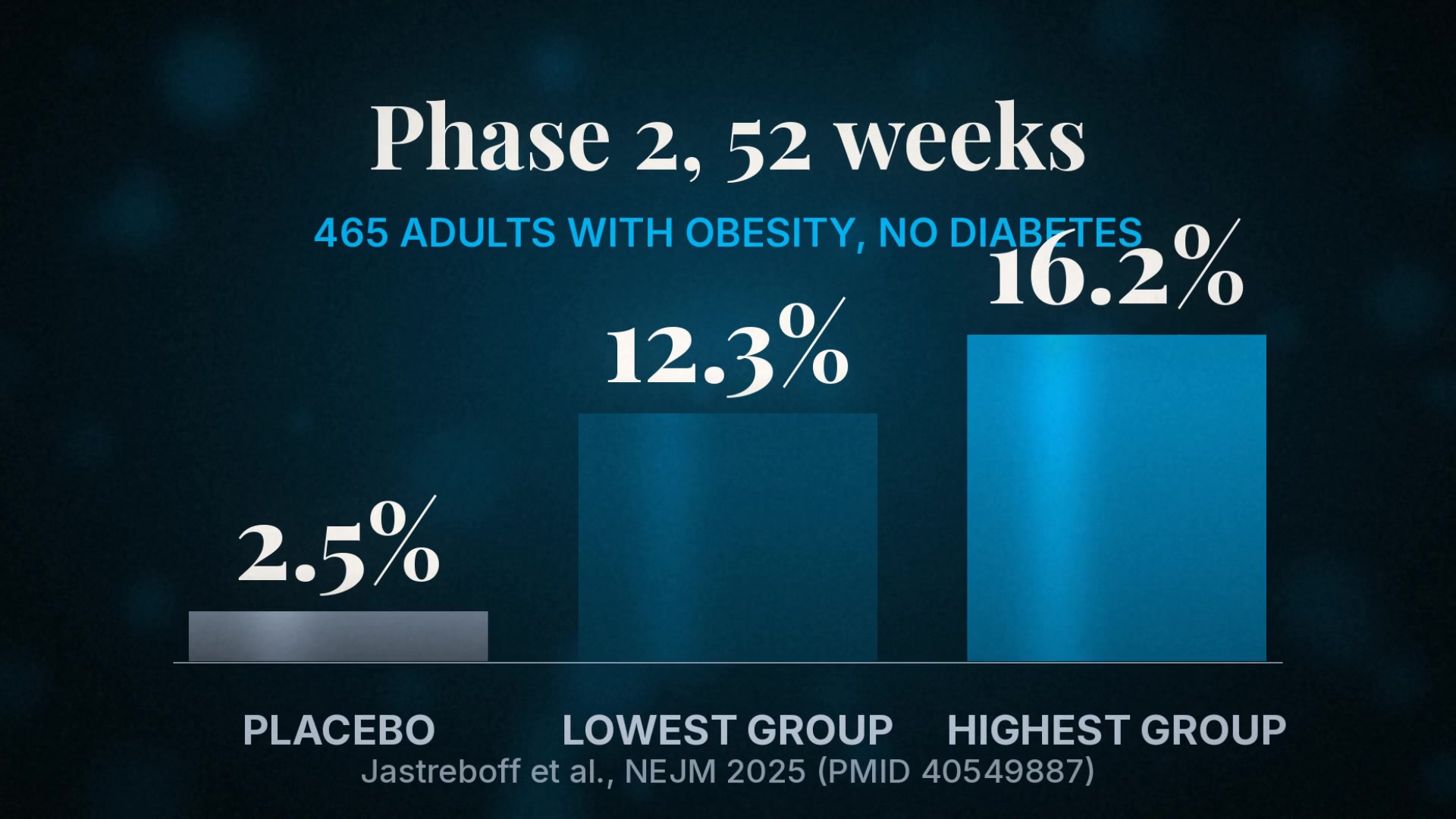
- Phase 2 (Jastreboff, NEJM 2025, PMID 40549887): 592 participants, 52 weeks, subcutaneous every 4 weeks (one arm every 8 weeks), with and without dose escalation. Obesity cohort (n = 465, mean BMI 37.9): -12.3% to -16.2% vs -2.5% with placebo (treatment policy estimand). Obesity with type 2 diabetes (n = 127): -8.4% to -12.3% vs -1.7%; HbA1c -1.2 to -1.6 points vs +0.1.
- Tolerability: gastrointestinal adverse events were common, less frequent with dose escalation and a lower starting dose; no unexpected safety signals.
What I would tell a patient
This is a genuinely new way to carry a peptide, and monthly or less frequent dosing could matter for people who struggle with weekly injections. But it is investigational. The phase 2 trial was maker funded, there is no head to head comparison with weekly agents, and the phase 3 MARITIME program (MARITIME-1, 3,853 adults, 72 weeks; MARITIME-2 in type 2 diabetes) is not expected to report before 2027. Today it is not a treatment option; it is a reason to keep reading.
For the patient-friendly version, read the ThriveMed post: https://www.thrivemed.us/thrivecityblog/maritide-once-monthly-glp1-peptide-antibody
Sources
- Veniant MM et al. Nat Metab 2024;6:290 (PMID 38316982).
- Jastreboff AM et al. NEJM 2025;393:843 (PMID 40549887).
- Turcot V et al. Nat Genet 2018;50:26 (PMID 29273807).
- Yie J et al. Antib Ther 2026;9:367 (PMID 42592044).
- ClinicalTrials.gov NCT06858839 (MARITIME-1), status checked October 2026.
Educational only, not medical advice. Andres Zuleta, MD.