A Fatty Tail and a Protein Bus: A Physician’s Read on How Liraglutide and Semaglutide Were Made to Last
Andres Zuleta, MD · A physician's read
Patients often ask me why one GLP-1 medicine is daily and another weekly. The receptor is the same. What changed was the clock, and the clock was set by albumin.
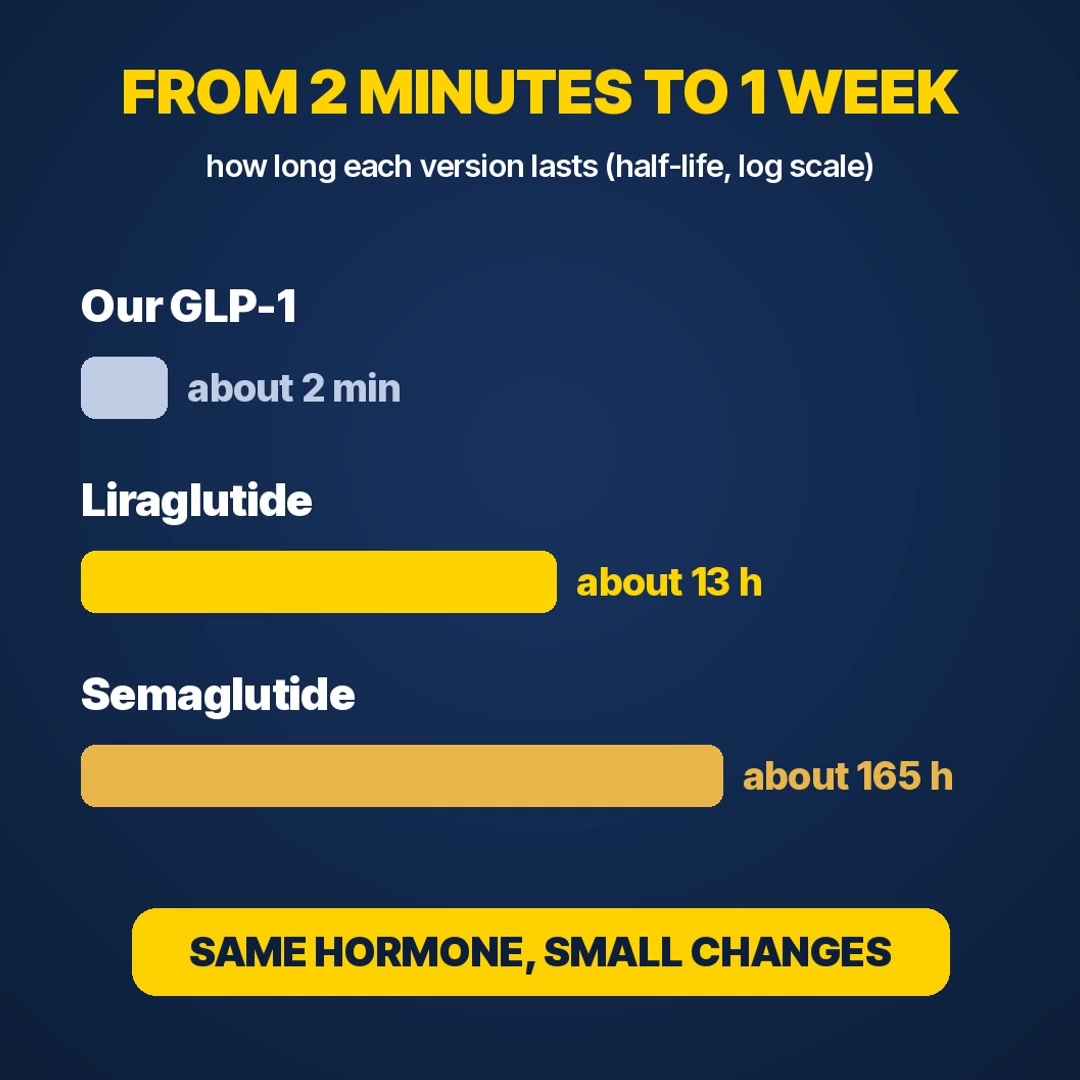
Native GLP-1 has an intravenous half-life of about 1.5 minutes: DPP-4 cleaves after position two, and the kidneys filter what is left. The Novo Nordisk team, led by Lotte Bjerre Knudsen, aimed for 24 hours of action from one subcutaneous injection. Their answer, published in 2000, was acylation: fatty acids of 12 carbons or longer bind serum albumin reversibly, which shields the peptide from DPP-4 and from renal filtration.
Three things I take from the discovery
- Stay close to the native hormone. Liraglutide keeps human GLP-1 almost unchanged, one amino acid swapped, with a 16 carbon fatty acid on lysine 26 through a short linker. Half-life in healthy men was 11 to 15 hours.
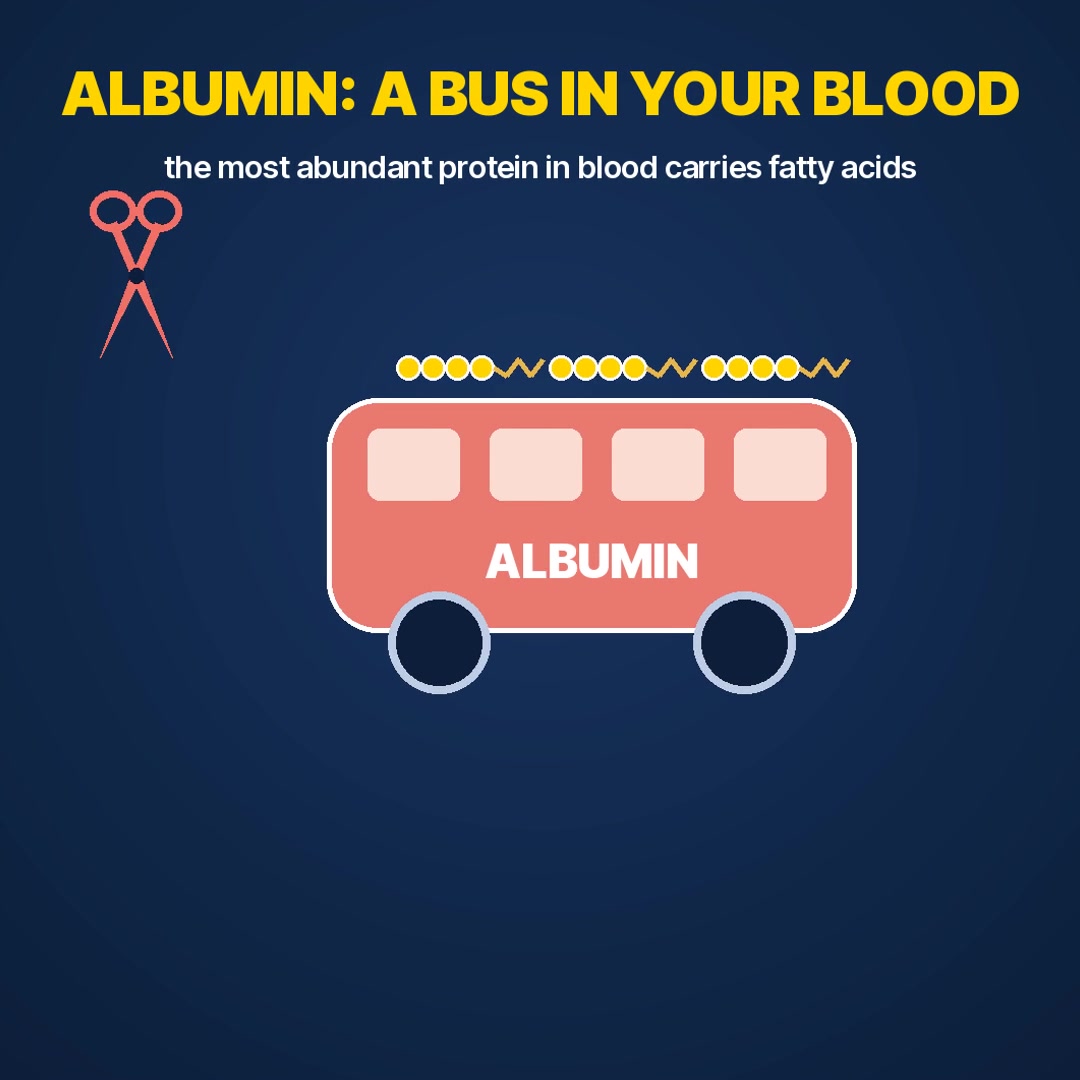
- Binding is a balance. Only the free fraction reaches the receptor, so stronger albumin binding buys duration at a cost in potency. Semaglutide paired Aib at position two, the DPP-4 site, with a C18 fatty di-acid on a longer, flexible linker. About 4,000 compounds later, the half-life was about 165 hours.
- Duration changes the medicine. Daily (EU 2009, US January 2010) became weekly (FDA, December 2017), which changes adherence and the steady state a patient lives on.
What I tell patients
- These are prescription medicines with real side effects, most often nausea and other stomach effects, used under a doctor's care.
- A longer half-life also means side effects can take longer to fade.
- LEADER and SUSTAIN-6 studied heart outcomes in people with type 2 diabetes; the right choice depends on the person.
The patient version, with the full story and every source, is on the ThriveMed blog: https://www.thrivemed.us/thrivecityblog/a-day-then-a-week-liraglutide-semaglutide-albumin
Key sources
- Knudsen LB, et al. J Med Chem 2000;43:1664 (PMID 10794683).
- Knudsen LB, Lau J. Front Endocrinol 2019;10:155 (PMID 31031702).
- Elbrønd B, et al. Diabetes Care 2002;25:1398 (PMID 12145241).
- Lau J, et al. J Med Chem 2015;58:7370 (PMID 26308095).
- Granhall C, et al. Clin Pharmacokinet 2019;58:781 (PMID 30565096).
- LEADER, NEJM 2016 (PMID 27295427); SUSTAIN-6, NEJM 2016 (PMID 27633186). Drugs@FDA NDA 022341 and 209637.
Educational only, not medical advice. Andres Zuleta, MD.