Andres Zuleta, MD · A physician's read
Patients still tell me weight is a matter of willpower. The GLP-1 story is the clearest counterexample I know: a gut hormone studied for decades as an incretin turned out to be a satiety signal.
In 1996, Turton and colleagues in Stephen Bloom's group showed GLP-1 and its receptors in the hypothalamus. Intracerebroventricular GLP-1 suppressed feeding in fasted rats, and the antagonist exendin (9-39) more than doubled intake in satiated rats. In 1998, Flint and colleagues in Copenhagen infused GLP-1 in 20 healthy men with breakfast: satiety rose and ad libitum lunch intake fell 12%.
Three things I take from the discovery
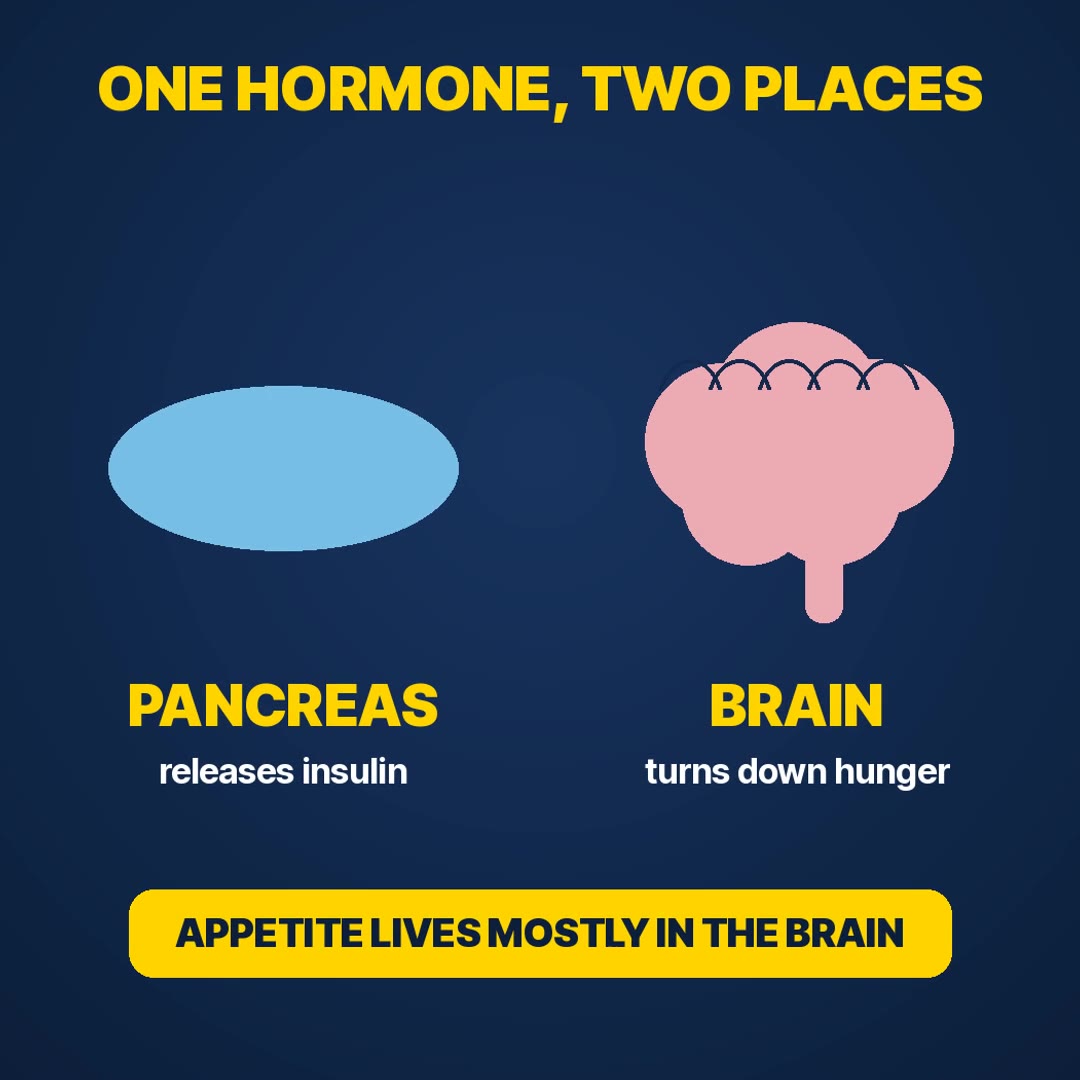
- Two sites, two effects. The insulin effect is mostly pancreatic; the appetite effect is mostly central. Rodent work (Gabery 2020) shows semaglutide reaching the hypothalamus, the brainstem and other areas linked to food intake.
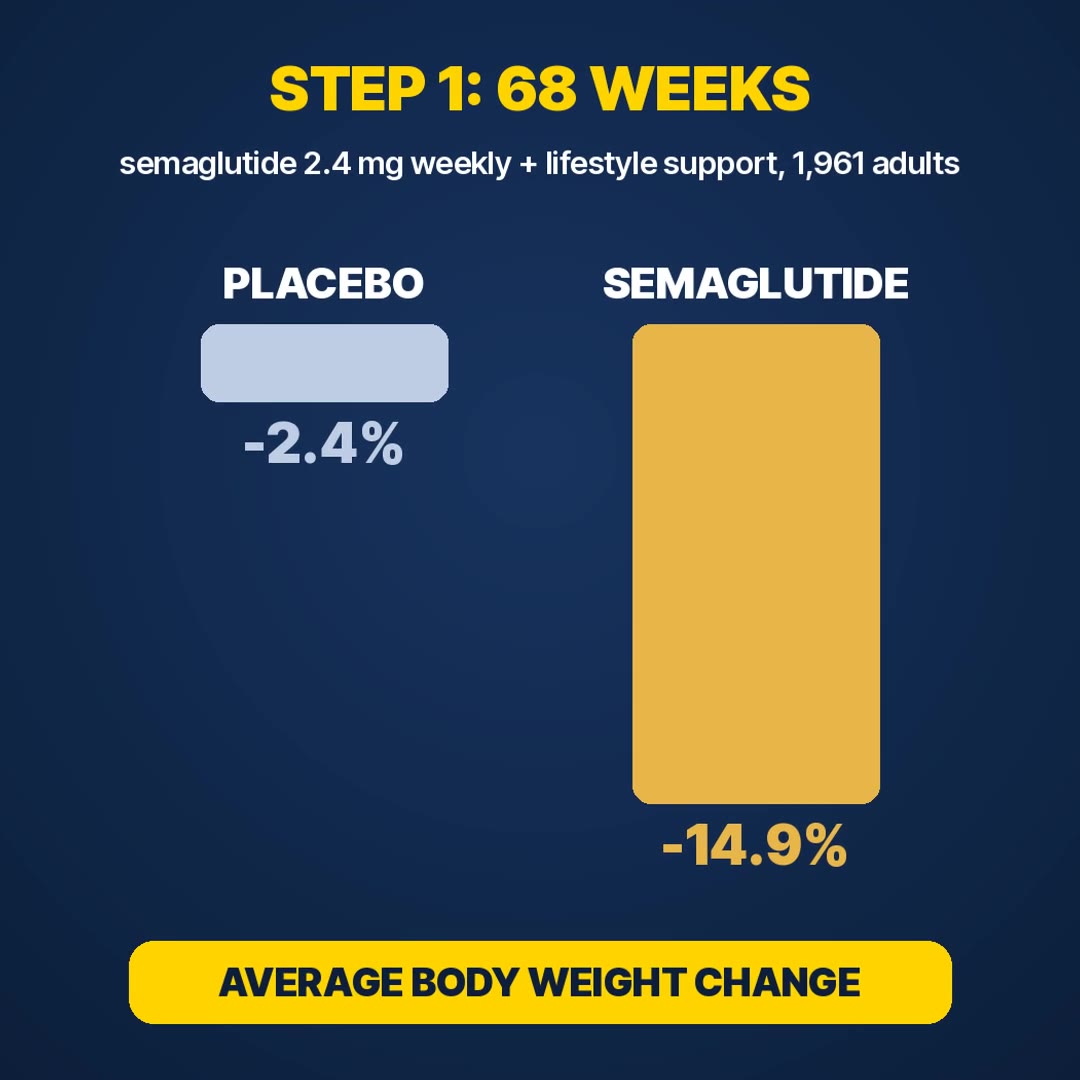
- Dose matters. Weight doses are higher than diabetes doses. Liraglutide 3 mg (SCALE, 3,731 adults): 8.4 kg vs 2.8 kg at 56 weeks; FDA December 2014. Semaglutide 2.4 mg weekly (STEP 1, 1,961 adults without diabetes, with lifestyle support): 14.9% vs 2.4% at 68 weeks, and 50.5% vs 4.9% reached 15% or more; FDA June 4, 2021.
- It behaves like chronic therapy. In STEP 4, randomized withdrawal to placebo after 20 weeks led to a 6.9% regain versus a further 7.9% loss on drug. In the STEP 1 extension, two thirds of the loss returned a year after stopping.
What I tell patients
- These are prescription medicines with real side effects, most often nausea and diarrhea, usually mild and transient; GI events led to discontinuation in 4.5% vs 0.8% in STEP 1.
- Plan for the long term: stopping usually means regain.
- SELECT (2023) found a 20% lower risk of major adverse cardiovascular events in people with established cardiovascular disease and overweight without diabetes (6.5% vs 8.0%, HR 0.80); the right choice depends on the person.
The patient version, with the full story and every source, is on the ThriveMed blog: https://www.thrivemed.us/thrivecityblog/from-blood-sugar-to-appetite-glp1-semaglutide-weight
Key sources
- Turton MD, et al. Nature 1996;379:69 (PMID 8538742).
- Flint A, et al. J Clin Invest 1998;101:515 (PMID 9449682).
- Pi-Sunyer X, et al. SCALE, NEJM 2015 (PMID 26132939).
- Wilding JPH, et al. STEP 1, NEJM 2021 (PMID 33567185); extension, Diabetes Obes Metab 2022 (PMID 35441470).
- Rubino D, et al. STEP 4, JAMA 2021 (PMID 33755728).
- Lincoff AM, et al. SELECT, NEJM 2023 (PMID 37952131).
- Gabery S, et al. JCI Insight 2020 (PMID 32213703). Drugs@FDA NDA 206321 and 215256.
Educational only, not medical advice. Andres Zuleta, MD.