A Lizard, One Amino Acid and a Self-Paid Patent: A Physician’s Read on Exendin-4
Andres Zuleta, MD · A physician's read
I talk about GLP-1 medicines with patients every week. Few of them know the first one came from a lizard, or that the man who found it paid for the patent himself.
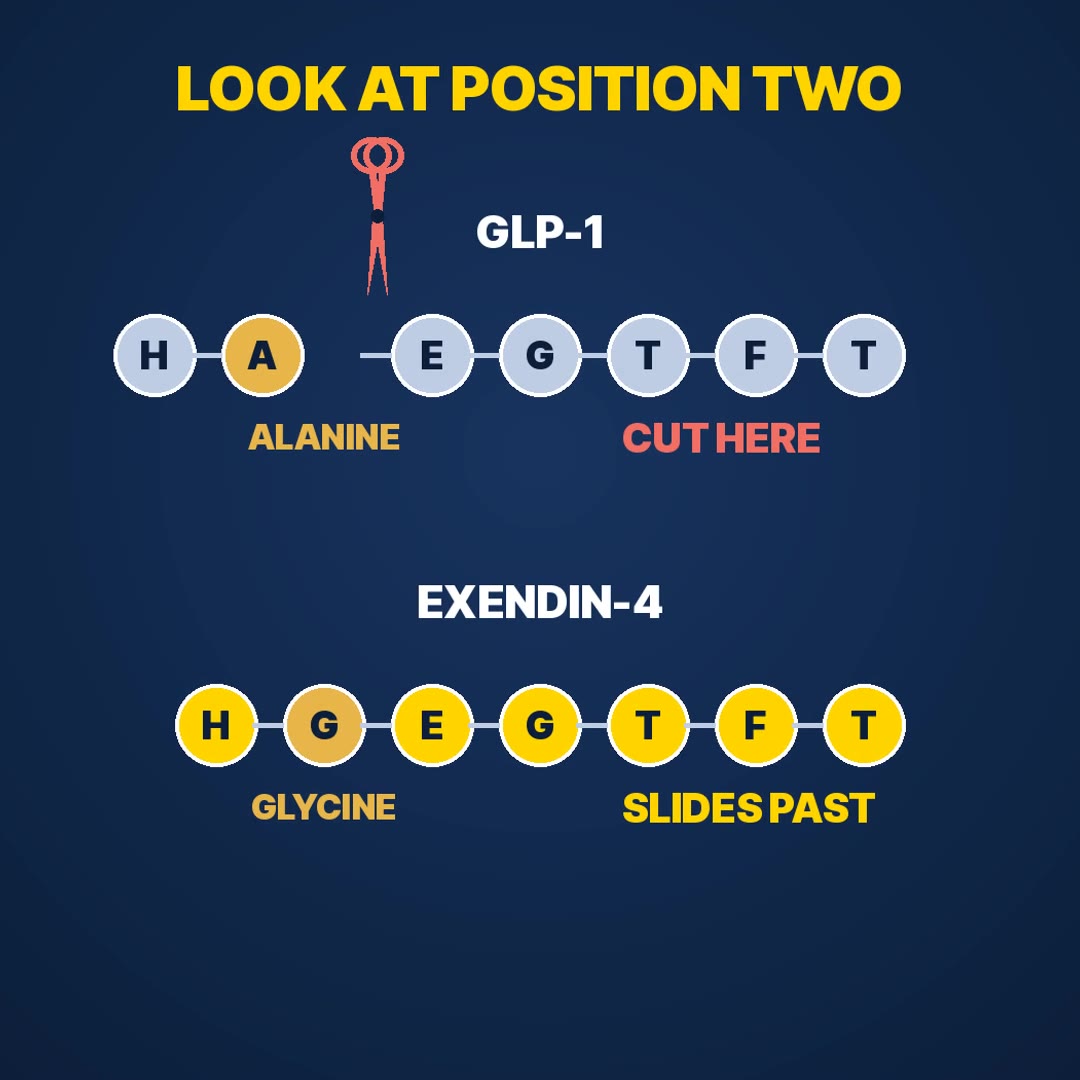
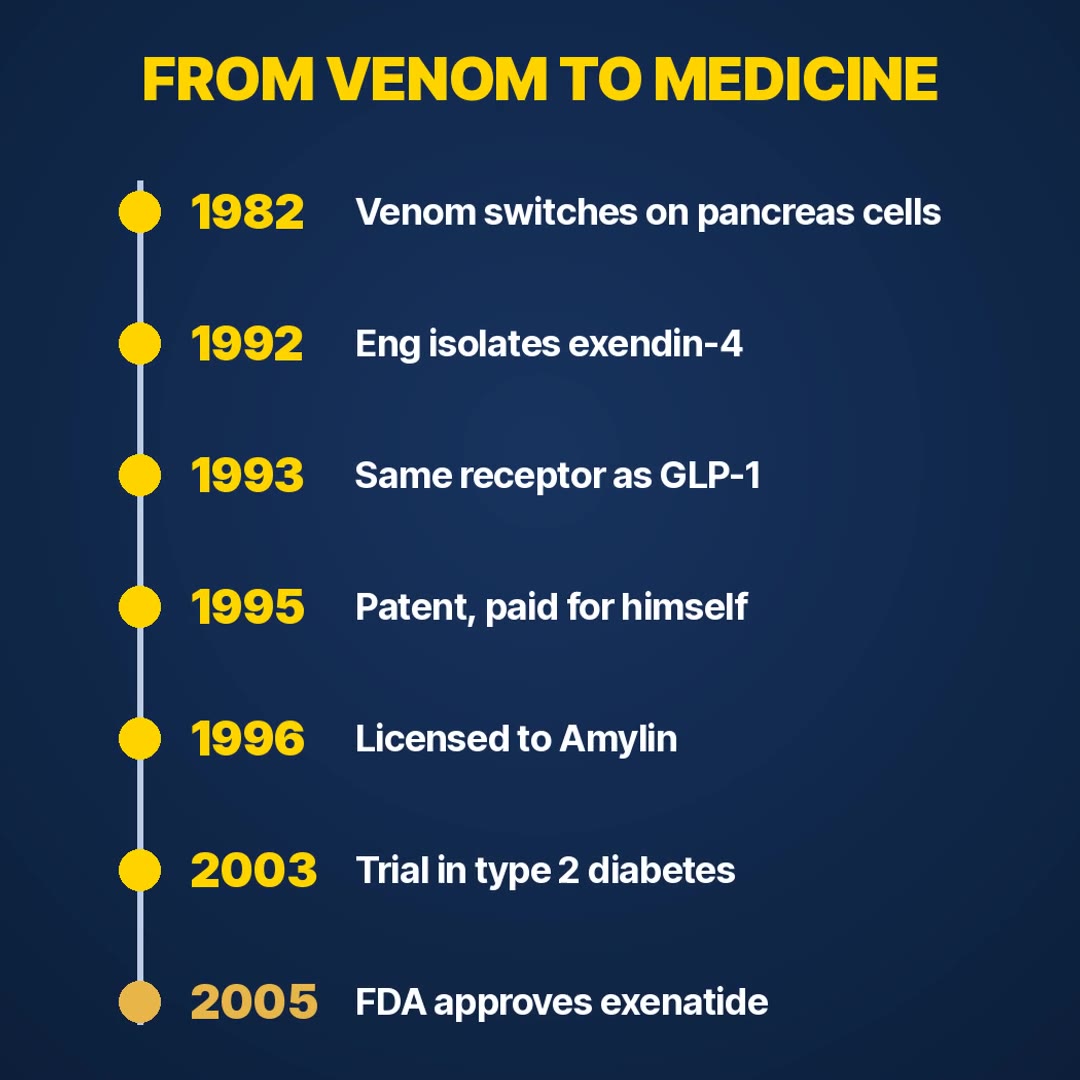
Natural GLP-1 works beautifully and briefly. The enzyme DPP-4 removes its first two amino acids within a minute or two, because position two is alanine. In 1992, John Eng, an endocrinologist at the Bronx VA, found exendin-4 in Gila monster venom. It activates the same receptor, but position two is glycine, and the enzyme does not cut it. In diabetic mice, its sugar lowering lasted more than four hours, against under one hour for GLP-1.
Three things I take from the discovery
- Duration is part of the pharmacology. The receptor was never the problem. How long the signal survived was.
- Tools find molecules. Eng built a screen for peptides that start with histidine before he went looking, and it found exendin-3 in 1990 and exendin-4 in 1992.
- Persistence carries ideas across gaps. The VA declined to patent it, most companies passed, and a small San Diego company, Amylin, licensed it in 1996. Approval came in April 2005.
What I tell patients
- Exenatide is lab-made, not taken from lizards.
- It lasted hours, not days, so it was injected twice daily, and nausea was the most common side effect.
- GLP-1 based medicines are prescription medicines with real side effects, used under a doctor's care, and the right choice depends on the person.
The patient version, with the full story and every source, is on the ThriveMed blog: https://www.thrivemed.us/thrivecityblog/the-lizard-venom-that-fixed-glp-1-exendin-4
Key sources
- Eng J, et al. J Biol Chem 1992;267:7402 (exendin-4).
- Mentlein R, Gallwitz B, Schmidt WE. Eur J Biochem 1993;214:829 (DPP-IV cleaves GLP-1).
- Goke R, et al. J Biol Chem 1993;268:19650 (exendin-4 at the GLP-1 receptor).
- Young AA, et al. Diabetes 1999;48:1026 (duration in diabetic mice).
- Kolterman OG, et al. J Clin Endocrinol Metab 2003;88:3082 (exenatide in type 2 diabetes).
- US Patent 5,424,286; FDA approval of exenatide, April 2005.
Educational only, not medical advice. Andres Zuleta, MD.