GLP-1 Was Hiding in Plain Sight: A Physician's Read on Its Discovery
Andres Zuleta, MD · A physician's read
I talk about GLP-1 with patients every week. Almost nobody knows how it was found, and the story changes how I explain it.
The 5-minute story, Episode 8 of 15 in The Peptide Breakthroughs.
Three things I take from the discovery
1. The gut is an endocrine organ. The 1964 observation still surprises people: sugar by mouth releases far more insulin than the same sugar by vein. That gap is the incretin effect, and GLP-1 is its main driver. When I tell patients that a meal is also a message, the idea lands.
2. Small structural details decide whether a molecule works. The glucagon gene, read first in an anglerfish in 1982 and in humans in 1983, carries two glucagon-like peptides. The obvious version, 37 amino acids, did nothing in a rat pancreas even at ten thousand times the dose. Svetlana Mojsov's short form, 31 amino acids, worked at tiny amounts. She saw the right cut point on a printout and built the peptide by hand on Merrifield's bead.
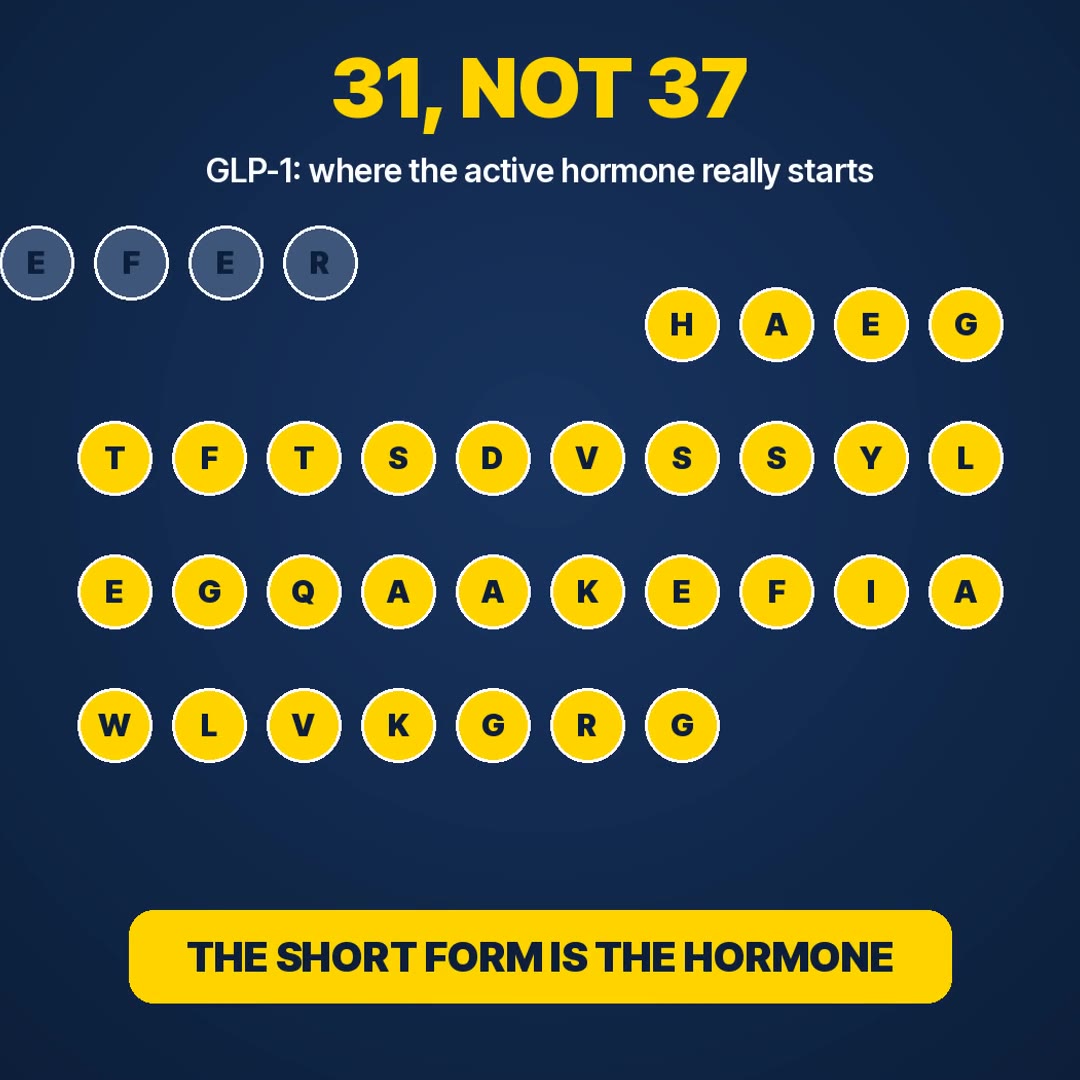
31, not 37 (ThriveMed explainer, based on Mojsov, Weir and Habener, J Clin Invest, 1987).
3. Independent replication is what made it real. In 1987, Habener and Mojsov's group in Boston, Jens Holst in Copenhagen and Stephen Bloom in London each showed the same thing from a different direction: rat pancreas, pig gut, human volunteers. And in 1993, Michael Nauck's team showed the effect depends on glucose, high sugar more insulin, normal sugar it eases off. That glucose dependence is why the field kept going.
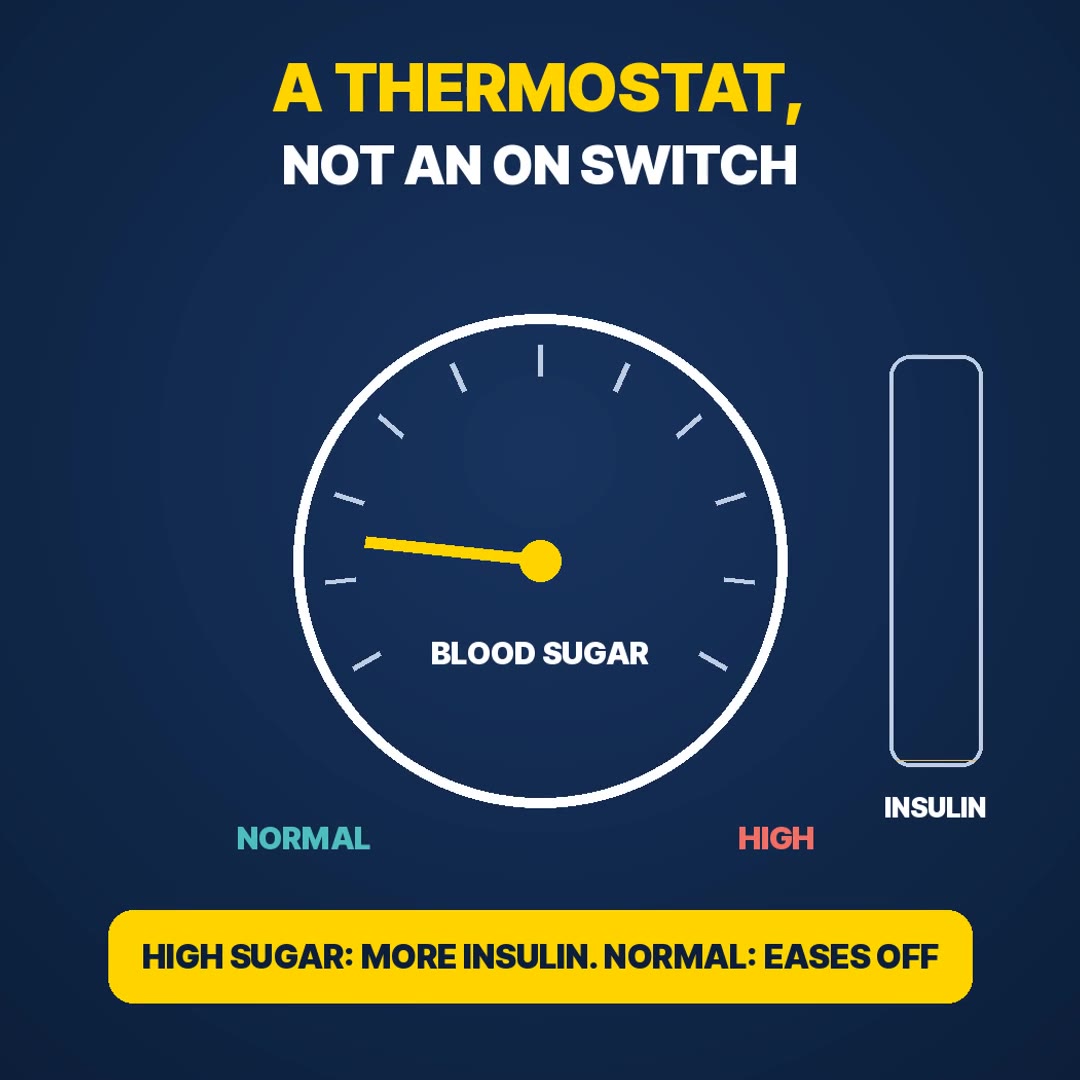
A thermostat, not an on switch (ThriveMed explainer, based on Nauck et al., Diabetologia, 1993).
What I tell patients
- Natural GLP-1 lasts one to two minutes in the blood. Today's medicines are engineered versions, which is the next episode.
- GLP-1 medicines are prescription medicines with real side effects, most often nausea and other stomach effects, and they belong under a doctor's care.
- Credit matters. Mojsov's role was overlooked for years; in 2024 she shared the Lasker award with Joel Habener and Lotte Bjerre Knudsen.
The full story, with every source, is on the ThriveMed blog: https://www.thrivemed.us/thrivecityblog/the-gut-hormone-hiding-inside-the-glucagon-gene-glp-1
Key sources
- Lund PK et al. PNAS 1982;79:345. Bell GI et al. Nature 1983;302:716.
- Mojsov S, Weir GC, Habener JF. J Clin Invest 1987;79:616. Holst JJ et al. FEBS Lett 1987;211:169. Kreymann B et al. Lancet 1987;2:1300.
- Nauck MA et al. Diabetologia 1993;36:741. Holst JJ. Physiol Rev 2007;87:1409. Lasker Foundation, 2024 award essay.
Educational only, not medical advice.