Amylin, the Second Beta Cell Hormone: A Physician’s Read on Cagrilintide, CagriSema and REDEFINE
Andres Zuleta, MD · A physician's read
For most of my training, I thought of the beta cell as an insulin factory. It ships two hormones at once. The second, amylin, has become the most discussed partner for GLP-1 agonism, and the trials deserve a careful read.
Physiology
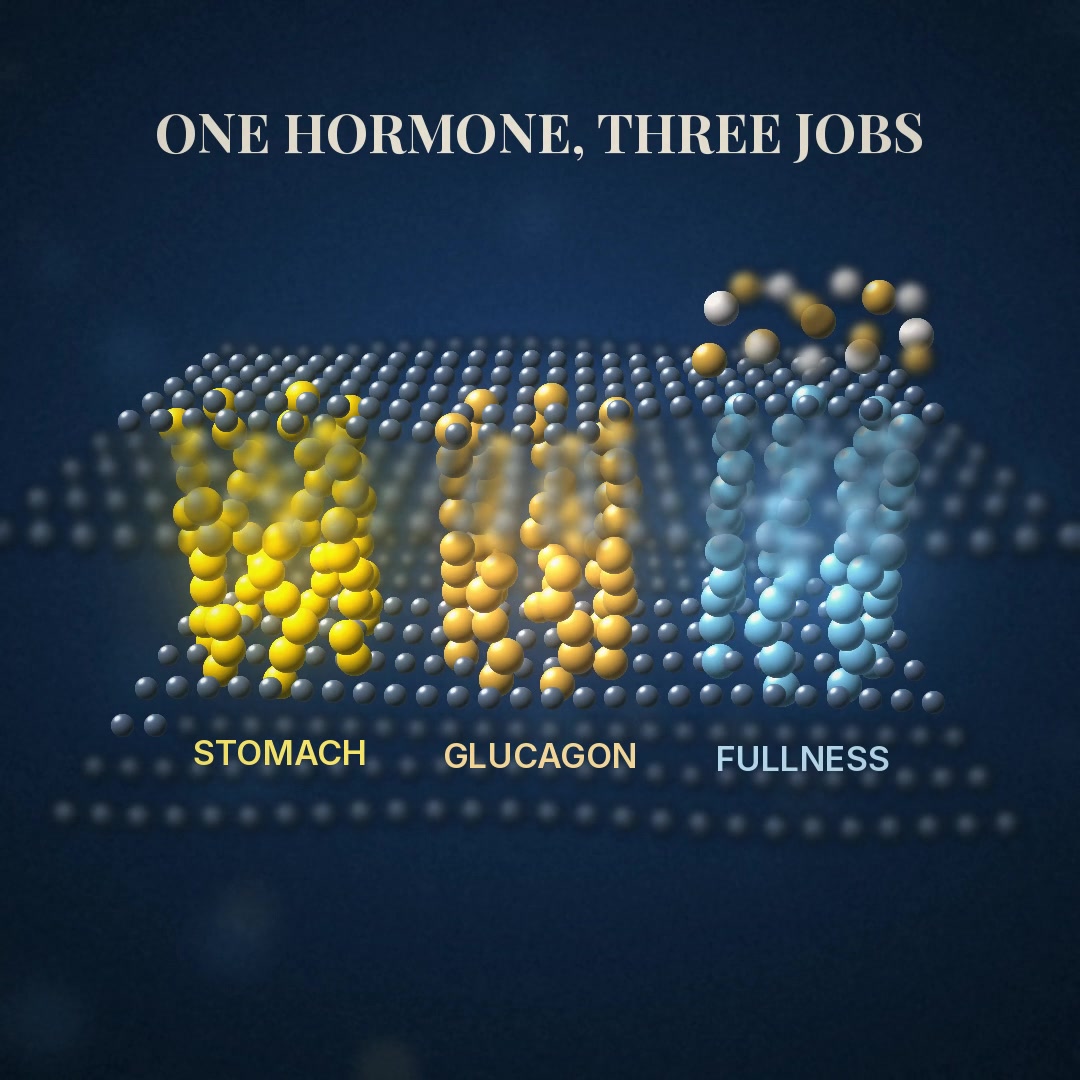
Amylin is a 37 amino acid peptide co-secreted with insulin. Cooper and colleagues purified it in 1987 from islet amyloid in type 2 diabetes (PNAS, PMID 3317417); Westermark's group described islet amyloid polypeptide independently. Its actions complement insulin after a meal: slower gastric emptying, suppression of postprandial glucagon, and satiety signaling through the area postrema in the brain stem.
From pramlintide to cagrilintide
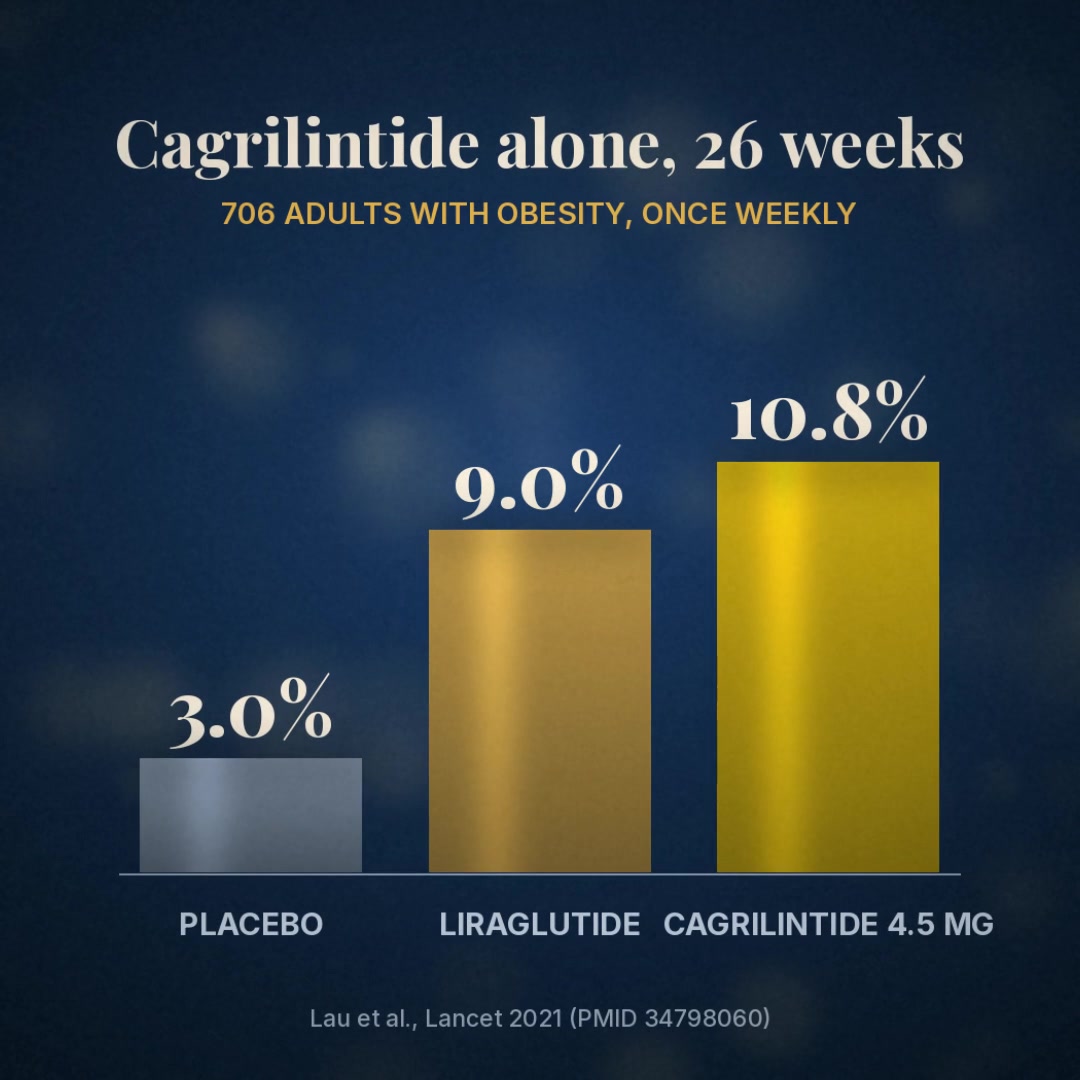
Human amylin aggregates into amyloid fibrils. Pramlintide carries proline substitutions at positions 25, 28 and 29, borrowed from rat amylin, which does not aggregate. It was approved in 2005 as a mealtime adjunct to insulin, with a half-life of 30 to 50 minutes (PMID 16278328). Cagrilintide is a long-acting acylated analogue dosed weekly. In the phase 2 trial (706 adults, 26 weeks), weight loss was 6.0% to 10.8% across doses vs 3.0% on placebo, and 10.8% at 4.5 mg vs 9.0% on liraglutide 3.0 mg (Lancet 2021, PMID 34798060).
REDEFINE 1 and 2
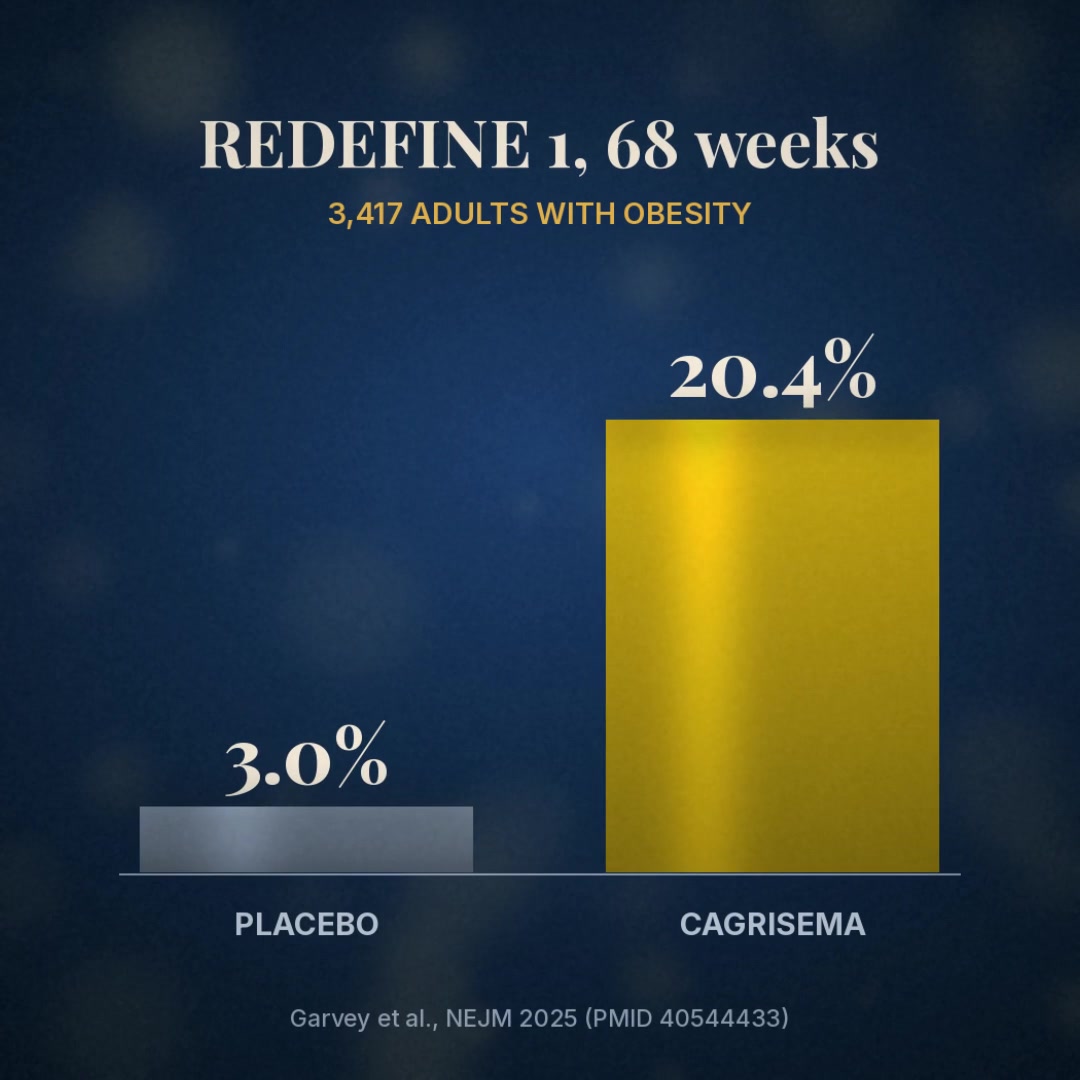
- REDEFINE 1 (NEJM 2025, PMID 40544433): 3,417 adults with obesity without diabetes, 68 weeks. CagriSema 2.4/2.4 mg: -20.4% vs -3.0% on placebo. Systolic blood pressure -10.9 vs -2.8 mmHg (Hypertension 2026, PMID 41328546).
- REDEFINE 2 (NEJM 2025, PMID 40544432): 1,206 adults with obesity and type 2 diabetes, 68 weeks. -13.7% vs -3.4%; HbA1c 6.5% or lower in 73.5% vs 15.9%.
- GI tolerability: gastrointestinal adverse events in 79.6% vs 39.9% in REDEFINE 1, mostly transient and mild to moderate.
Amycretin
Amycretin is a unimolecular GLP-1 and amylin receptor agonist. In a single-site phase 1b/2a study (Lancet 2025, PMID 40550231), weight change at 36 weeks was -24.3% at 60 mg vs -1.1% on placebo and -22.0% at 20 mg vs +1.9%. Sample sizes were small and withdrawals were frequent, so I read these as signals, not estimates.
What remains unknown
- CagriSema is under FDA review (filed December 2025) and not approved; amycretin is in development.
- Cardiovascular outcomes: REDEFINE 3 (7,076 adults with established cardiovascular disease) is ongoing (Am Heart J 2026, PMID 42838477).
- Weight trajectory after discontinuation is not yet published.
- All phase 3 trials were sponsor funded.
- Products sold online as cagrilintide or amylin peptides are not the studied medicine.
My read
The physiological logic is sound: amylin and GLP-1 act on overlapping but distinct satiety circuits, and pairing them mirrors the body's own meal response. The gain over semaglutide alone is real but should be weighed against GI tolerability until outcome data arrive.
The patient-friendly version, with every source: https://www.thrivemed.us/thrivecityblog/insulins-quiet-partner-amylin-cagrisema
Educational only, not medical advice. Andres Zuleta, MD.